International and Comparative Librarianship

DEDICATED TO PIONEERS   INCLUDING:
S. R. Ranganathan, P. N. Kaula, R. N. Sharma, J. F. Harvey, D. J. Foskett, J. P. Danton, M. M. Jackson, etc.
This Blogosphere has a slant towards India [a.k.a Indica, Indo, South-Asian, Oriental, Bharat, Hindustan, Asian-Indian (not American Indian)].

Saturday, November 21, 2015

Broadening Your Internet Search -- Making Searching Even Easier

Internet (or Google) search is not the same a library's catalog search.

Let's first see the problem with what we do (in our Internet search step), and how Google assumes our search request.

In Google search, by using different keywords your search gets more specific.
Example: a. (key words) International Comparative Librarianship; b. (words & key phrases, i.e., words in quotes) "Information services" Research "Content management" Training "Human Resources" "Helpful Advice" "Related Services"
The above specificity reduces the number of search results. Remember, if you make it too specific, you may miss some useful websites.

When you type a word, Google search mechanism views it as though there is an AND between each of your search terms-- though you may not have typed: AND. Obviously Google will search only for websites that have all the words you entered.

Now to broaden your search, you can type OR between two words (that automatically avoids AND). Then, Google looks for sites that have any one of your search terms. For example, if you search for ‘International OR librarianship’, you will find only results with either words--results show all the sites containing the words ‘international’ and all the pages containing the word ‘librarianship’.  [adapted from Open.edu]


See also:

Labels: , , ,

Tuesday, March 18, 2014

The bad news ... even 25 years after its invention, not everything is available on the Internet; The good news ... 33 reasons why libraries with physical books still matter

(Pew Internet’s survey explored in depth what people do at libraries)


  • 33 reasons why books, libraries and librarians are still extremely important, by Will Sherman (quoted at Cites & Insights):
1. Not everything is available on the internet
2. Digital libraries are not the internet
3. The internet isn’t free
4. The internet complements libraries, but it doesn’t replace them
5. School libraries and librarians improve student test scores
6. Digitization doesn’t mean destruction
7. In fact, digitization means survival
8. Digitization is going to take a while. A long while.
9. Libraries aren’t just books
10. Mobile devices aren’t the end of books, or libraries
11. The hype might really just be hype
12. Library attendance isn’t falling—it’s just more virtual now
13. Like businesses, digital libraries still need human staffing
14. We just can’t count on physical libraries disappearing
15. Google Book Search “don’t work”
16. Physical libraries can adapt to cultural change
17. Physical libraries are adapting to cultural change
18. Eliminating libraries would cut short an important process of cultural evolution
19. The internet isn’t DIY
20. Wisdom of crowds is untrustworthy, because of the tipping point
21. Librarians are the irreplaceable counterparts to web moderators
22. Unlike moderators, librarians must straddle the line between libraries and the internet
23. The internet is a mess
24. The internet is subject to manipulation
25. Libraries’ collections employ a well-formulated system of citation
26. It can be hard to isolate concise information on the internet
27. Libraries can preserve the book experience
28. Libraries are stable while the web is transient
29. Libraries can be surprisingly helpful for news collections and archives
30. Not everyone has access to the internet
31. Not everyone can afford books
32. Libraries are a stopgap to anti-intellectualism
33. Old books are valuable
Conclusion
Society is not ready to abandon the library, and it probably won’t ever be. Libraries can adapt to social and technological changes, but they can’t be replaced. While libraries are distinct from the internet, librarians are the most suited professionals to guide scholars and citizens toward a better understanding of how to find valuable information online. Indeed, a lot of information is online. But a lot is still on paper. Instead of regarding libraries as obsolete, state and federal governments should increase funding for improved staffing and technology. Rather than lope blindly through the digital age, guided only by the corporate interests of web economics, society should foster a culture of guides and guideposts. Today, more than ever, libraries and librarians are extremely important for the preservation and improvement of our culture."

See also:
  • HOW TO KEEP A LIBRARY OF (PHYSICAL) BOOKS, Meditations on strategy and life, Ryan Holiday 
Extract:
Below are some tips on keeping and maintaining your own library. I hope they help:
-First, you have to read a lot.  
-Buy, buy buy. I took some heat for criticizing checking books out from the library a while back.   
-In other words, RESIST THE KINDLE.  
-Organize, organize, organize. 
-Become a resource for others.  
-Refer back to them!  
-The point of owning the books is to use them.  
-Books are no substitute for human contact, but it is still beneficial, I think, to be in the physical company of the greats.  
-Don’t be afraid to quit books that suck.  
-On that note, don’t collect for the sake of collecting.  
-Don’t loan.  
-It’s all about the IKEA shelves.  
-Collect the unusual.  
-Go through other people’s libraries. 
-Having a library keeps the information fresh in your head. continue reading
1. Not Everything is Available on the Internet
2. Digital Libraries are not the Internet
3. The Internet isn’t Free
4. The Internet Compliments Libraries, but Doesn’t Replace Them
5. School Libraries and Librarians Improve Student Test Scores
6. Libraries Aren’t Just Books
7. Mobile Devices are not the End of Books or Libraries
8. Library Attendance isn’t Falling It’s Just More Virtual
9. Physical Libraries are Adapting to Cultural Change
10. Eliminating Libraries would Cut Short an Important Process of Cultural Evolution

Labels: , , ,

Monday, October 25, 2010

International Internet Preservation Consortium (IIPC)

About the consortium: In July 2003 the national libraries of Australia, Canada, Denmark, Finland, France, Iceland, Italy, Norway, Sweden, The British Library (UK), The Library of Congress (USA) and the Internet Archive (USA) acknowledged the importance of international collaboration for preserving Internet content for future generations. This group of 12 institutions chartered the IIPC to fund and participate in projects and working groups to accomplish the Consortium’s goals. The initial agreement was in effect for three years, during which time the membership was limited to the charter institutions. Since then, membership has expanded to include additional libraries, archives, museums and cultural heritage institutions involved in Web archiving. For a complete list visit our members page.
In the news / on the same shelf:
  • Archiving the web ~~ Born digital: National libraries start to preserve the web, but cannot save everything, coninue reading: The Economist
  • New Library Technologies Dispense With Librarians - WSJ.com
    "In this suburb of St. Paul, the new library branch has no librarians, no card catalog and no comfortable chairs in which to curl up and read. Instead, the Library Express is a stack of metal lockers outside city hall. When patrons want a book or DVD, they order it online and pick it up from a digitally locked, glove-compartment- sized cubby a few days later."
  • The Battle of Building Library's Digital Collection, Revisited

    Labels: , , ,

  • Tuesday, June 17, 2008

    Paul Otlet and Henri La Fontaine: World Wide Webliographers' Revisited

    SCIENCE | June 17, 2008
    The Web Time Forgot
    By ALEX WRIGHT
    The Mundaneum Museum honors the first concept of a world wide wonder, sketched out by Paul Otlet in 1934 as a global network of “electric telescopes.”...

    Extract: Historians typically trace the origins of the World Wide Web through a lineage of Anglo-American inventors like Vannevar Bush, Doug Engelbart and Ted Nelson. But more than half a century before Tim Berners-Lee released the first Web browser in 1991, Otlet (pronounced ot-LAY) described a networked world where “anyone in his armchair would be able to contemplate the whole of creation.”...
    On the same shelf:

    [Info courtesy: sdyck@hevanet.com ]

    Labels: , , ,

    Monday, October 29, 2007

    Stay in India for free via blogger Web site

    Tony Tharakan , Reuters & CanWest News Service, 27 Sep 2007

    Hotel rooms in India tend to be expensive and hard to find, but a new Web site is helping visitors find a bed, with a warm conversation thrown in, all for free.


    While most hosts on http://www.extrabed.in/ offer a spare bed and an Internet connection, some offer sightseeing tours, endless cups of coffee or even a game of Scrabble to add that personal touch.

    The Web site was born after its founder, Kiruba Shankar, randomly contacted bloggers in Mumbai to see if anyone would put him up. He found several. continue reading

    see also:

  • ExtraBed on NDTV
  • Labels: , , , , , , ,

    Wednesday, July 25, 2007

    Demise of the Local Catalog or The OPAC Reborn?


  • Demise of the Local Catalog, by Roy Tenant***
  • The OPAC Reborn.(Online Public Access Catalog at libraries)
  • The Future of Cataloging, by Peachy
  • Thought for the day - Now if we had the semantic web or enough catalogers

    ***My 2 cent:
    This article is an excellent eye opener, and makes a good feed-forward. Thanks to John Jaeger for sharing this info.

    I agree with Roy that libraries must pack off their catalogs (I packed it too, and seen so many). But moving with a Google model (a free search-ware mindset) is probably not going to make the library catalog that useful and value-added, on the face of umpteen competitors; and a searchology (as Google calls it) that comes with a package minus the controlled vocabulary (with whatever name one likes it, LC, Meta tags, etc.).

    I think there must be an effort to upgrade our mindset of catalogoing / cataloguing and fine tune it with our own foundations of librarianship and user-friendly ventures.

    I have been working on the idea of visual catalogs, that started with the idea of an indepth, as well as, localized cataloging spirit of my professional inspirer: Sanford Berman.

    FYI. I have compiled a webliography on this theme. Would appreciate your comments on this dimension. The link to my webliography is:
  • Labels: , , , , , , , , ,

    Wednesday, July 18, 2007

    Thought for the day - Now if we had the semantic web or enough catalogers

    Source: Limits of FT Search Bring Fun Item @ Alaskan Librarian
    Now if we had the semantic web or enough catalogers to catalog web resources, I could specify that I only wanted pages, blog posts etc that are actually related to the virtual world of Second Life. And that's what I'd get. Just like if I'd like the new Haines Borough Public Library Catalog to only notify me when they got new books on Second Life.
    see also:
  • The Emerging-Semantics Web (”The Semantic Web is Dead”)
  • WEB IS A FOREST ... SEMANTIC WEB A JAPANESE GARDEN ?
  • Seamless Structured Semantic Web -Will Tags, Clouds, Ontologies, Taxonomies, and Facet Analysis help?
  • Semantic Web and Facet Analysis

    Labels: , , , , ,

  • Saturday, June 30, 2007

    Why Web 2.0 is leading back to full cataloging - Library Juice

    Info courtesy: Sukhdev's World

    "Just an observation of interest to librarians, about Web 2.0 types of websites.
    Two examples of rich Web 2.0 sites are Last.fm and LibraryThing." continue reading


    See also:
  • This network is for Library 2.0 Stuff
  • Uncontrolled Vocabulary @ InfoSciPhi

    Labels: , , , ,

  • Tuesday, June 05, 2007

    The Emerging-Semantics Web (”The Semantic Web is Dead”)

    Mor Naaman, a research scientist with Yahoo Research Berkeley, stood in front of a roomful of semantic Web researchers and declared that the semantic Web is dead. This happened last week at the International World Wide Web Conference in Alberta, Canada, as Naaman describes on the Yahoo Research Berkeley blog. [Search Engine Watch]

    The language used to describe the Semantic Web is complicated enough – at a glance, it looks a bit quantum theory-ish, just enough to make your eyes roll back into your head to look for ways to kill themselves – but Tim Berners-Lee, who's responsible for all those Ws littering your URLs, inspired enough faith that whatever the Semantic Web was, it could be accomplished. [Arguing The Semantic Web: Dead Or Just Not Alive?]


    May 16, 2007 on 10:24 am | by Mor Naaman, a research scientist @ Yahoo! Research Berkeley:
    Last week, I participated in a WWW2007 panel called “Multimedia Metadata Standards in a Semantic Web 3.0“, where I took the opportunity to declare the Semantic Web dead. As you can imagine, such a declaration in front of a crowd of semantic web researchers provoked many responses. While I believe panels should be provocative and entertaining, I also have specific reasons for why I went as far as calling the Semantic Web “dead”. Let me explain what I mean.

    There is no way that we can engage the masses in annotating media with “semantic” labels. At best, we can get the people to annotate content (such as Flickr images or YouTube videos) with short text descriptions or tags. This works only because tags are simple; powerful (can be used for many tasks) and, in some systems, carefully engineered to match the user’s natural motivations. Our best hope is to be able to take this bottoms-up annotation, or folksonomy if you will, and try to assign some semantics to it later - Flickr’s Clustering is a great example, as well as Y!RB’s TagMaps and our upcoming SIGIR paper (”Towards Automatic Extraction of Event and Place Semantics from Flickr Tags”, available in pdf)... continue reading

    See also my related posts:
  • WEB IS A FOREST ... SEMANTIC WEB A JAPANESE GARDEN ?
  • Seamless Structured Semantic Web -Will Tags, Clouds, Ontologies, Taxonomies, and Facet Analysis help?
  • Semantic Web and Facet Analysis

    Labels: , , , , ,

  • Wednesday, May 23, 2007

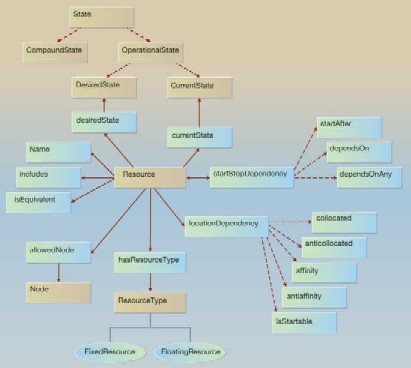
    WEB IS A FOREST ... SEMANTIC WEB A JAPANESE GARDEN ?


    Musings of a student of Ranganathan

    F.J. DEVADASON


    See also related resources:


  • Seamless Structured Semantic Web -Will Tags, Clouds, Ontologies, Taxonomies, and Facet Analysis help?
  • Semantic Web and Facet Analysis

    Labels: , , , , ,

  • Friday, May 04, 2007

    Seamless Structured Semantic Web -Will Tags, Clouds, Ontologies, Taxonomies, and Facet Analysis help?

    Here is a commercial (with malice towards none):


    I found a good article on how tags are messing the Web's infostructure. See:
    Tagging: It’s no longer fun and easy, By: Mark Gibbs, Computerworld (27 Apr 2007):

    "Most people think that tagging on the Web is pretty easy and fun. Give ‘em a blog or a Web page and a field named “tags,” and they’ll start stuffing in text with wild abandon in the hopes that their content will be easily found by people who are desperately searching for information and opinion on feline hairball cures or cycling in the Ozarks or whatever their particular hobby is.
    Alas, all these folks are doing is polluting the Web....
    The first problem with tagging is semantic vagueness. For example, does the tag “china” apply to the country or crockery?
    A second problem is that the format of tags isn’t standardized.
    The third and perhaps biggest problem is the overuse of tagging ..."

    Continue reading


    Another word by (late) Prof. Karen Sparck Jones:
    "Confining the SW (=Semantic Web) to field tagging is essentially high-level cataloguing of the familiar library or museum kind, exemplied by ‘author’, ‘title’, ‘publication date’ and so forth. Done properly, this is far from trivial, as the substantial Anglo-American cataloguing rules demonstrates. For example, is the author exactly what appears on the title page or some specific person? But though proper cataloguing is not for amateurs, it is not necessary for useful cataloguing to go overboard on rules." Source: What’s new about the Semantic Web? Some questions

    What is your thinking? Do the tags, clouds, facet analysis, etc. help, anyways? or does the semantic taming can be done via SMORE - Semantic Markup, Ontology, and RDF (ResearchIndex)

    See also my previous posts:
  • So much of visual literary genre, so little time to categorize it
  • Semantic Web and Facet Analysis
  • Visualizing the Web Infostructure I - Cites, Insights, Farsights
  • Labels: , , , , ,

    Monday, April 23, 2007

    What the Ancient Egyptians Taught me about Blogging

    You may think there can be no way in the afterlife that there is a link between one of the oldest civilisations on earth and one of the most modern pastimes, but you would be wrong. The Ancient Egyptians blogged in Stone. Continue reading MATT JONES

    See also:

  • Blogs and visual innovation
  • Blog As A Teaching Tool

    Labels: , , , , , , ,

  • Sunday, March 11, 2007

    Is this yet another Wiki in Library and Information Science

    My guess: that this "Wiki" is not open to all and free for all to hack, whack and crack. And, I see that it is limited by registeration and subject.
    But, my librarian buddy, Baby Boomer Librarian, i.e, Wilfred Drew questions its credibility:
    I was going to blog about this but had forgotten about it. As Sarah points out in her post at LibrarianInBlack, it is a wiki or wiki wanna be that is supposed to look at librarianship with a global focus. Don't waste your time. It is not even clear as to who actually owns the wiki when you look at it. There is no ownership information at all. A WHOIS query gets this information: ... READ MORE

    There are others who are looking to find more authentic, authoritative info about this new foundland:
    Librariansworld.com was sent to me by Amol, who tells me that it is a popular site in India, Pakistan, and the Far East. It’s the only site that I know of (please let me know if I’m wrong) that offers a social networking tool for librarians. It’s not a pure SN site, but it’s not that bad either. A good start.
    Is anyone working on something like this in the states? One would think with all of the discussion about social software in our profession, it would be in the works. Steve

    Librarians World
    "Librarian's World is a network of Librarians & Information Scientists . It is a democratically managed site without any editor. It offers Social bookmarking, Expertise Exchange, Discussion Forums, Librarians Webpages and many other facilities with an objective of better networking & knowledge sharing amongst Librarians."

    What others say:
  • Here is an interesting website for Library Professionals, gokhalesharad012 20 Feb 2007
  • Lets join and share, Iam Saravanan, Information Manager
  • I have read many topics on digital libraries on www.librariansworld.com, go ahead and get benefit. Venusgoody1 10 Mar 2007
  • Hello All, I have come across a very Interesting website www.librariansworld.com hope it will intrest you too. Thanks & Regards, Pranaykumar Soft-AID
  • Useful info on document preservation on www.librariansworld.com, Venusgoody1 pdflib 2007-02-21

    P.S. I just received another update about the IASLIC website:
    New IASLIC WEBSITE : http://www.iaslic1955.org.
    Send your uggestion for its improvement
    Regards
    Dr Pilusjkanti Panigrahi
    Dr Pijushkanti Panigrahi, Reader, Dept of Lib and Inf Science, University of Calcutta, 87/1 College Street,Kolkata - 700 073, West Bengal, India, email : panigrahipk@yahoo.com, (M) : +91 94342 43522. Secretary, Education Division, IASLIC; Associate Editor, IASLIC Bulletin, IASLIC, Kolkata-700 054

    My most recent posts:
  • Copyrights and Copywrongs - Responsibility of Media and Academia
  • Wikipedia and Academia Hit News Headlines Again
  • Health Information and Libraries Journal 24:1 (March 2007)
  • Reviewing a blog - benchmarks?

    Labels: , , , , , , , , , ,

  • Wednesday, March 07, 2007

    India tops online population growth chart


    Press Trust of India, March 06, 2007 at 1602 hours IST
    Updated: Tuesday, March 06, 2007 at 1609 hours IST
    New Delhi, March 6: India has emerged as the fastest growing country of Internet users, surpassing the growth rates in the US, China, Japan and has been ranked as the eighth largest country in terms of netizens.

    Worldwide Internet audience has grown by 10% over the last year, says comScore Networks
    Today, comScore Networks, a leader in measuring the magnitude of the digital age, announced that around 747 million people, who are aged 15 and above, used the Internet worldwide in January 2007 itself. This shows a 10% increase when compared with the figures of January 2006.
    Among the top 15 countries, Internet audiences in India, the Russian Federation and China increased the most in 2006, growing 33, 21 and 20 per cent respectively.
    India’s Internet population grew 33 Per Cent, which was the fastest increase in Internet population in the world.
    PS. World Internet Users' Image courtesy: Carpe Diem

    Labels: , , , , , ,

    Tuesday, February 27, 2007

    Semantic Web and Facet Analysis

    Dear Colleagues,
    Sub: Ranganathan had SEVEN Facets and not FIVE : Facet Analysis and Semantic Web
    A brief write-up about Semantic Web and Facet Analysis is available on my Website. You can directly read Purpose 2 in the write-up.
    Prof. Tom Wilson (famous for his “The Non-sense of Knowledge Management” article) has put some more information on this topic in a Blog. I would appreciate your comments and suggestions.
    Thank you
    F.J. Devadason
    PS: Please forward this message to appropriate lists and friends working on semantic web.

    "Most of the atom is empty ... most of the semantic
    web is meta data ... WWW is becoming Winding Way Web


    See also:
  • Semantic Search on Pictures, Raju

    Punch Line: Finding stuff the Search Engines can't
    The secrets of 'Deep Web' searches, By: Lee Ratzan, Computerworld (15 Dec 2006)


    See my previous posts:

    Labels: , , , , ,