International and Comparative Librarianship

DEDICATED TO PIONEERS   INCLUDING:
S. R. Ranganathan, P. N. Kaula, R. N. Sharma, J. F. Harvey, D. J. Foskett, J. P. Danton, M. M. Jackson, etc.
This Blogosphere has a slant towards India [a.k.a Indica, Indo, South-Asian, Oriental, Bharat, Hindustan, Asian-Indian (not American Indian)].

Friday, November 15, 2013

Featured Helpouts by Google -- offerings involve a charge, r u ready with you Visa/MasterCard?

"Real help, from real people, in real time". That's the slogan of Google Helpouts, on the first page you don't see the money-matters!!! But, the bottomline is all about you pay as you go.
"Helpouts restricts listings and Helpouts that are marked for "health services." Learn more.
In order to view and search for health-related Helpouts, you must opt-in to allow Helpouts to create calendar entries and to send email and text notifications for any health service Helpouts that you start or schedule as a customer. You can find this option on the Settings page. Learn more."
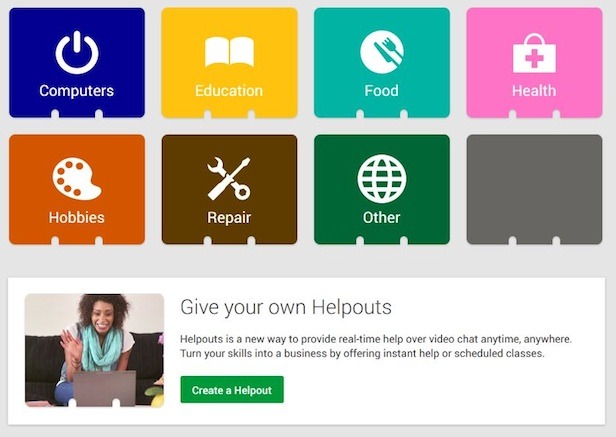
Google Helpouts : Is this yet another Beta  (incl other beta, such as, Google Answers, that are gone with the wind). If it stays, will it be virtual reference platform--taking away the techniques, tools, know-how, skills + the cents some libraries get from a service, aka intelligent research?

Image courtesy: Michael Sean Wright

Labels: ,

Sunday, November 03, 2013

Librarian, Documentalist, Bibliophile, Bibliographer, Embedded Librarian or a Librarian by some other Name?

 "Documentation is the process of collecting and subject classifying all the records of new observations and making them available, at need, to the discoverer or the inventor."  Documentation, (p. 10, 1948). Quoted in in Dictionary of Library and Information Science QuotationsEdited by Mohamed Taher and L S S R Valluri Ramaiah. ISBN: 8185689423, (New Delhi , Aditya, 1994) (p. 51).

"The information transfer chain begins with initial generation and exposition of information. This is the business entirely of the working scientist. The later steps, such as indexing, cataloguing, and retrieving are traditionally the job of documentalist." Scientific Communication, Key Papers in Information Science, 1971. p. 21. Quoted in in Dictionary of Library and Information Science QuotationsEdited by Mohamed Taher and L S S R Valluri Ramaiah. ISBN: 8185689423, (New Delhi , Aditya, 1994) (p. 376).

Whatever is their name/title, librarians are now more than ever in need a name that which is appropriate with the ever changing face of libraries. 

We are not sure what this librarian's profession will be called in 2020/2050. However, we know that it was called Library Economy since 1876, and Library Science since 1942. In short, the field has different names, such as, Librarianship, Library Science, Documentation, Bibliography, Information Management, Knowledge Management, Library and Information Science, Information Science, Embedded librarianship, Digital librarianship, etc. Is this because as some feel: Having no “umbrella definition,” librarianship means different things in different settings (Gerhardt, 1978, p. 4)?


In tracing the changing names of the field of librarians, we need to do a quick re-cap on the emergence of a term 'Documentation' esp., in India in 1960s and then its disappearance in 2000s from libraries, information management related job titles, and library schools:
  • Documentation Research and Training Centre (DRTC) at Bangalore was established in January 1962 by Dr. SR Ranganathan, to train a special brand of librarians. Very similar was the reason of founding the Indian National Scientific Documentation Centre (INSDOC in Delhi--link inactive: http://insdoc.org); both offering a course called Associateship--DRTC's Associateship in Documentation and Information Science (ADIS); and INSDOC's  “Associateship in Documentation and Reprography, later re-named in 1977 as Associateship in Information Science (AIS)--More about the present face of INSDOC @ NISCAIR's brochure of the course, last updated : 2010Since that date to the recent days, at least in India, Masters degree in Library/Information Science from a recognized university or Associate ship from INSDOC/DRTC were considered equivalents. In  2002 we heard of (continuing the AIS Master's) the merger of INSDOC with  NISCOM; and Since, 2008 DRTC's ADIS has been changed to Master of Science in Library and Information Science (MS-LIS).
Note: The above disappearing scenario may not be true in Europe, and other parts  of the world, and this is obvious in The return of documentation?. Similarly as in the past many others have used this term in their own perspectives, e.g., Visual Resources An International Journal of Documentation. Hence, this post is not about what's in a name. Rather it is tracing the historicity of the names that the profession of librarians is going thro'. Also, this post is not about a written-manual (on how to use a software, aka documenting how-to manual): The Death of Documentation


Recently, I found a blog's title (Notes on Documentation and Librarianship), that leads me to wonder what is the current terminology of the profession, in a global village?? 

Googling, one further finds it was prevalent rather with breaks, between 1950s-1990, and then what follows later is a confusion/fusion/etc., see the samples: 
Read more »

Labels: , , ,

Sunday, February 06, 2011

First public library in nation to drop Dewy Decimal

Libraries can adapt and follow other models for arranging the library resources (esp., book shelves). Dewey Decimal, Library of Congress, and other classification schemes are one way to arrange books. Here is an innovative way to arrange library books, as in book stores. Does this, new way, help and increase user-friendliness? Too early to answer.

See the details here:
EXTRACT:
The Prelinger Library is a small privately owned "public library" in San Francisco with the unique philosophy that browsing library stacks can reveal new knowledge, if the books are arranged for browsing. This is counter to most public libraries who rely on computer terminal searching, databases and the Dewey Decimal system to atomize books and subjects, with stack browsing a sort of random after effect, and in some places--like the Library of Congress--normally not even allowed. Now a (real) public library in Arizona has joined the revolution and claims to be the first public library in the nation to drop the Dewey Decimal system. Instead, books will be shelved by topic, similar to the way bookstores arrange books. The demise of the century-old Dewey Decimal system is overdue, county librarians say: "People think of books by subject. Very few people say, 'Oh, I know Dewey by heart.' " continue reading:
First public library in nation to drop Dewy Decimal

Labels: ,

Tuesday, July 01, 2008

Indian Contributions @ IFLA 2008

World Library and Information Congress: 74th IFLA General Conference and Council

"Libraries without borders: Navigating towards global understanding"10-14 August 2008, Québec, Canada

Labels: , , , , , ,

Friday, June 06, 2008

Making by Stealing of Un-cited (Recycled) Content in the Wiki Age: Role of Librarians?


What comes to our mind by seeing the emerging open-source and open-gate information revolution? (most Netizens may think this as an avenue to be creative, in terms of manipulating and exploiting the deep Web--with the freedom and choice to use the Read-Write Web, 24X7, via blogs, wikis, and second life in nano-seconds)

"We the users turned creators and distributors of content are TIME's Person of the Year 2006, and AdAge's advertising agency of the year. We form a new Generation C. We have MySpace, YouTube, and OurMedia; we run social software, and drive the development of Web 2.0. But beyond the hype, what's really going on?" Blogs, Wikipedia, Second Life, and B... >>>>>>-----

The following links may make us think (indirectly, albeit) about a role libaries may have in promoting best practices for knowledge sharing:

Labels: , , , , , , ,

Saturday, October 06, 2007

RANGANATHAN REVISITED: FACETS FOR THE FUTURE


ISKO UK meeting: Connecting communities: Content, knowledge, information: Same Difference?

Event Details:

5th November 2007
14:00 - 18:00
Venue
University College London
Sir David Davies Lecture Theatre (G08), Ground Floor, Engineering Faculty
Roberts Building, Torrington Place, WC1E 7JE

Programme

14:00
Vanda Broughton Facet analysis as a fundamental theory of knowledge organization
14:40
Claudio Gnoli ‘Classic’ vs. 'freely' faceted classification
15:20
Jan Wyllie
Simon Eaton
Faceted classification as an intelligence analysis tool
16:00
Tea/coffee
16:30
Factiva Faceted Categorisation for the corporate desktop
Visualisation and interaction using metadata to enhance user experience
17:15
Aduna AutoFocus: An Open-source Facet-Driven Enterprise Search Solution
18:00
Networking, wine & nibbles

Click here for more Info

Labels: , , , , , , , ,